DryDeck Rapid Help is a referral service, not a contractor. The pros we connect you with are independent providers, and they do the work. Ask each one about licensing and insurance before the job starts.
In West New York, a leak rarely stays in one place. Buildings are packed close together, with shared walls and many apartments under one roof. A fast temporary seal can protect the units below and give you time to plan the real fix.
This page explains what tarping and temporary sealing involve, how they differ on flat and pitched roofs, what affects timing, and what to do while you wait.
What should I do first when my roof is leaking?
Protect people and belongings first, then call. Move furniture and electronics away from the drip. Put a bucket under the leak and lay towels or plastic sheeting on the floor.
If the ceiling is bulging with water, poke a small hole in the lowest point of the bulge with a screwdriver. Stand to the side and keep a bucket ready. This lets the water drain in a controlled way instead of letting the whole section collapse.
Then call the number on this page. Tell the dispatcher where you are, what kind of roof the building has, and where the water is showing up. Take photos before you move anything, because you will want them later for insurance.
What is emergency roof tarping and a temporary roof patch?
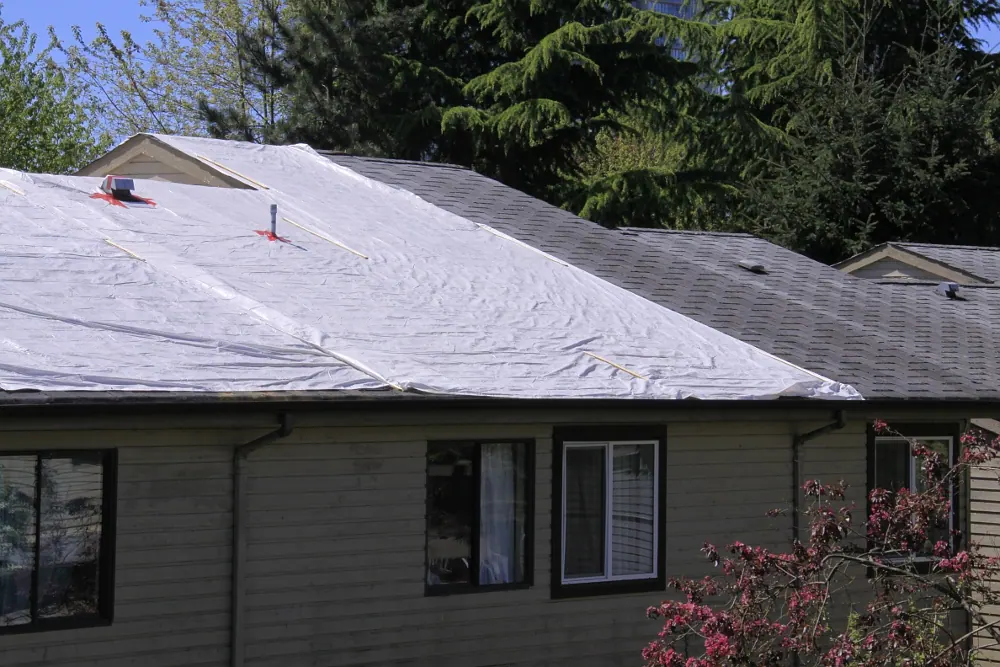
Emergency roof tarping means covering a damaged area with heavy-duty sheeting and fastening it so wind and rain cannot get under it. A temporary roof patch is a smaller, targeted seal over a crack, split seam or hole. Both are short-term fixes meant to stop active water entry.
Neither one is a permanent repair. They are a bridge. The goal is to keep the building dry while the cause is found, the damage is documented and a lasting repair is scheduled.
The right method depends on the roof type, the weather and the size of the damage. The pro you are connected with will usually decide on site.
Dealing with this in West New York right now? Call and get connected with an independent local pro.
Call for Fast Help: (201) 578-5264How is a flat or low-slope roof protected in a leak emergency?
A flat roof is often sealed with patch material rather than covered with a loose tarp. Many roofs in West New York are flat or low-slope, and a loose sheet can catch the wind or let water pool under it. Sealing the actual opening is usually more effective.
Common temporary steps on a flat roof can include the following.
- Clearing standing water and debris so the damaged area can be seen and dried
- Applying patching material or a sealant over a split in a membrane seam
- Re-sealing loose wall flashing or counterflashing at a parapet wall
- Covering a failed roof penetration, such as a vent pipe or HVAC curb, with a temporary seal
- Clearing a clogged roof drain or scupper so water stops ponding
- Using sheeting with weights or fasteners only where the roof type allows it
Common flat roof types and how they affect the patch
Roofs here are often built-up (tar and gravel), modified bitumen, torch-down, EPDM rubber or TPO membrane. Each one reacts differently to patch products. Some materials bond well to one surface and fail on another.
Tell the pro what you know about the roof, even if it is only that it looks black and rubbery or covered in gravel. If you can't tell, that is fine. They will look.
How is a pitched roof tarped?
On a pitched roof with asphalt shingles, the tarp is rolled over the damaged area and anchored in a way that sheds water downhill. The tarp usually goes over the ridge or is secured well above the damage so water cannot run beneath it.
The pro may remove loose shingles or debris first. Then the tarp is fastened along the edges, often with wood strips so the fasteners do not tear the sheeting in the wind. A tight, flat tarp holds up better than a loose one.
If the roof decking or underlayment is exposed, covering it quickly matters. Wet decking can swell, soften and grow mold if it stays wet.
What causes sudden roof leaks in West New York?
Most sudden leaks here come from age plus a storm. Older flat roofs lose flexibility from summer heat and the freeze-thaw cycle. Seams open, flashing cracks, and a heavy rain finds the weak spot.
Local causes often include:
- Clogged roof drains and scuppers that let ponding water sit on the roof
- Torn or lifted membrane from wind uplift, since the cliff edge above the Hudson sees strong gusts
- Storm debris damage after a nor'easter or summer thunderstorm
- Cracked flashing at parapet walls, bulkheads and chimneys
- Roof blisters that split open and leak
- Failed seals around skylights, vents and rooftop equipment
- Deferred maintenance on older rental and multi-family buildings
What are the warning signs that need a temporary seal now?
Active dripping is the clearest sign, but other signs mean you should call soon. A water-stained ceiling, sagging ceiling drywall, bubbling paint, a musty smell or wet insulation can all point to water getting in.
On the roof itself, look for standing water that does not drain, torn membrane, missing shingles or loose flashing, if it is safe and you can see it from a window or access point. Never climb onto a wet roof.
How does the pro handle a tarping or temporary seal call?
The pro starts by finding where the water is entering, then makes it safe and sealed. The steps often run in this order.
- Talk through the problem by phone and ask about the roof type and access
- Check the roof, or the area of entry, for safety and for the source of water
- Clear debris and standing water from the damaged area
- Apply a temporary patch, seal or tarp suited to the roof type
- Take photos of the damage and the temporary work
- Explain what a permanent repair would involve and what to watch for in the meantime
How fast can emergency roof tarping happen in West New York?
Timing depends on weather, demand and access. Right after a big storm, many buildings call at once, so there may be a wait. We cannot promise an arrival time, but we can get your call to a local independent pro quickly.
Access can slow things down. Tall buildings, narrow streets and tight rooftop access may mean extra coordination for ladders, lifts or material delivery. Building management may also need to approve rooftop access.
Calling early helps. Even if the pro can't arrive right away, they can often give you steps to limit damage until they do.
What affects the scope of a temporary roof repair?
The size of the damaged area, the roof type and the roof height shape the job most. A small seam split is a quick job. A large torn membrane or storm damage across a wide area takes more time and material.
Other factors include weather during the work, roof access, how much water is trapped in the roof and whether the building has multiple levels. We do not quote prices. Ask the provider to explain the scope in plain words before work begins.
How does tarping help with insurance claim documentation?
Tarping shows you acted fast to limit damage, and that is often expected under a policy. Keep photos of the leak, the ceiling, the roof and the temporary work. Save any receipts and written notes from the provider.
Landlords, tenants and building managers should each notify the right party quickly. Tenants usually report to the landlord or building manager. Owners and co-op boards can contact their insurer. Ask the pro for a short written description of the damage and what was done. A roof inspection report or a thermal or moisture survey may help later if the claim is large.
Do I need a permit or a registered contractor?
Temporary repairs may not need a permit, but larger repairs and replacements often do. Permits and inspections go through the municipal construction office under the NJ Uniform Construction Code (NJ UCC). Ask the provider whether the permanent work will need one.
In New Jersey, home improvement contractors generally must be registered. You can check registration with the NJ Division of Consumer Affairs. We cannot verify any provider, so confirm licensing, registration and insurance directly before work starts.
What should I do while waiting for the roofer?
Keep people away from sagging ceilings and wet electrical areas. If water is near lights, outlets or fixtures, turn off power to that area at the breaker if you can do so safely. Call the utility or an electrician if you are unsure.
Move valuables, cover furniture and keep buckets emptied. Open windows or run fans to help drying if the weather allows. Do not go onto the roof yourself during rain, wind or ice.
Let neighbors and building management know. In attached buildings, water can spread through party walls and reach other units fast.
What comes after the temporary fix?
A temporary patch buys time, but the real cause still needs a lasting repair. That might be sealing seams, replacing flashing, restoring drainage, or a partial or full re-roof. Our guide to flat roof leak repair explains what a permanent fix often looks like.
If clogged drains or ponding are involved, see roof drain and ponding water repair. For ceilings already stained or sagging, read about ceiling leaks from the roof.
Dry out wet insulation and drywall soon. Mold growth can begin within a couple of days in damp spaces.
Where in West New York and nearby do callers need tarping?
Calls come from across the city and neighboring towns. Mixed-use buildings along the Bergenline Avenue corridor often have flat roofs with rooftop equipment. Waterfront buildings face stronger wind and driving rain.
We also connect callers in Guttenberg, Union City, North Bergen, Weehawken, Edgewater and other nearby towns. If you are not sure whether you are in range, call the number on this page. For a broader look, see our page on emergency roofer West New York help.
Frequently asked questions
Is a roof tarp a permanent fix?
No. A tarp or temporary patch only stops water for a short time. The cause of the leak still needs a lasting repair, such as sealing seams, replacing flashing or restoring drainage.
Can a flat roof be tarped?
Sometimes, but flat roofs are often sealed with patch material instead. Loose tarps can catch wind and trap water. The pro will choose what fits the roof type and the damage.
How long does a temporary roof seal last?
It depends on the materials, the weather and the roof condition. Treat it as a short-term fix and schedule a permanent repair soon. Ask the pro how long to expect it to hold.
Will insurance cover emergency tarping?
Many policies expect you to take reasonable steps to limit further damage, but coverage varies. Check your policy, take photos and keep receipts. Contact your insurer or building management right away.
I rent my apartment. Who do I call about a roof leak?
Tell your landlord or building manager right away, in writing if you can. They control the roof and rooftop access. Take photos of the damage to your unit and belongings.
Can you promise a time the roofer will arrive?
No. We are a referral service and cannot guarantee arrival times. We connect you with an independent local pro as quickly as we can, and they will give you their own timing.